NF-κB controls the transcription of DNA. NF-κB is found in almost all animal cell types and is involved in cellular responses to stimuli such as stress, cytokines, free radicals, ultraviolet irradiation, oxidized LDL, and bacterial or viral antigens. [show the full text]

NF-κB inhibitors
| Cat.No. | Product Name | Information | Product Use Citations | Product Validations |
|---|---|---|---|---|
| E4686 | DCZ0415 | DCZ0415 is a potent inhibitor of TRIP13. DCZ0415 impairs nonhomologous end joining repair and inhibits NF-κB activity. It triggers anti-myeloma effects both in vitro, and in vivo, and primary cells obtained from myeloma patients resistant to drugs. |
|
|
| S7672 | Omaveloxolone (RTA-408) | Omaveloxolone (RTA-408) is a synthetic triterpenoid that activates the cytoprotective transcription factor Nrf2 and inhibits NF-κB signaling. Phase 2. |
|
|
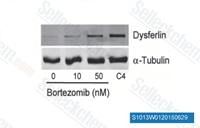
| S1013 | Bortezomib | Bortezomib is a potent 20S proteasome inhibitor with Ki of 0.6 nM. It exhibits favourable selectivity towards tumour cells over normal cells. This compound inhibits NF-κB and induces ERK phosphorylation to suppress Cathepsin B and inhibit the catalytic process of autophagy in ovarian cancer and other solid tumours. |
|
|
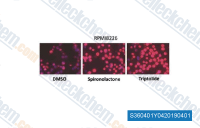
| S3604 | Triptolide | Triptolide is a diterpene triepoxide, an immunosuppressive agent extracted from the Chinese herb Tripterygium wilfordii. It functions as a NF-κB inhibitor with dual actions by disruption of p65/CBP interaction and by reduction of p65 protein. Triptolide (PG490) abrogates the transactivation function of heat shock transcription factor 1 (HSF1). Triptolide inhibits MDM2 and induces apoptosis through a p53-independent pathway. |
|
|
| S8341 | TAK-243 (MLN7243) | TAK-243 (MLN7243) is a potent, mechanism-based small-molecule inhibitor of the ubiquitin activating enzyme (UAE) with an IC50 of 1 ± 0.2 nM in the UBCH10 E2 thioester assay. It has minimal inhibitory activity in a panel of kinase and receptor assays, as well as on human carbonic anhydrase type I and type II. TAK-243 (MLN7243) induces ER stress, abrogates NF-κB pathway activation and promotes apoptosis. |
|
|
| S8483 | CBL0137 Hydrochloride | CBL0137 (CBLC137, Curaxin 137) HCl activates p53 and inhibits NF-κB with EC50s of 0.37 μM and 0.47 μM in the cell-based p53 and NF-kB reporter assays, respectively. It also inhibits histone chaperone FACT (facilitates chromatin transcription complex). |
|
|
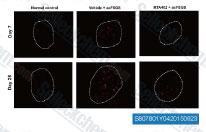
| S8078 | Bardoxolone Methyl (RTA 402) | Bardoxolone Methyl (RTA 402, TP-155, NSC 713200, CDDO Methyl Ester, CDDO-Me) is an IKK inhibitor, showing potent proapoptotic and anti-inflammatory activities; Also a potent Nrf2 activator and nuclear factor-κB (NF-κB) inhibitor. Bardoxolone Methyl abrogates ferroptosis. Bardoxolone methyl induces apoptosis and autophagy in cancer cells. |
|
|
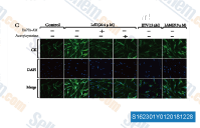
| S1623 | N-Acetylcysteine (NAC chemical, N-Acetyl-L-Cysteine) | Acetylcysteine (N-acetyl-l-cysteine, NAC, N-acetylcysteine) is a ROS (reactive oxygen species) inhibitor that antagonises the activity of proteasome inhibitors. It is also a tumor necrosis factor production inhibitor. Acetylcysteine (N-acetyl-l-cysteine) suppresses TNF-induced NF-κB activation through inhibition of IκB kinases. Acetylcysteine (N-acetyl-l-cysteine) induces apoptosis via the mitochondria-dependent pathway. Acetylcysteine (N-acetyl-l-cysteine) inhibits ferroptosis and virus replication.Solutions are unstable and should be fresh-prepared. |
|
|
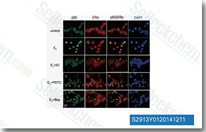
| S2913 | BAY 11-7082 (BAY 11-7821) | BAY 11-7082 (BAY 11-7821) is a NF-κB inhibitor, inhibits TNFα-induced IκBα phosphorylation with IC50 of 10 μM in tumour cells. BAY 11-7082 inhibits ubiquitin-specific protease USP7 and USP21 with IC50 of 0.19 μM and 0.96 μM, respectively. BAY 11-7082 induces apoptosis and S phase arrest in gastric cancer cells. |
|
|
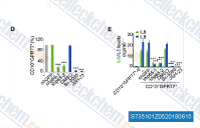
| S7351 | JSH-23 | JSH-23 is an inhibitor of NF-κB transcriptional activity, which inhibits LPS-stimulated nuclear factor (NF)-κB transcriptional activity in RAW 264.7 cells with an IC50 value of 7.1 μM, and interferes with LPS-induced NF-κB nuclear translocation without affecting IκB degradation. |
|
|
NF-κB (nuclear factor-kappa B) is a highly regulated, homo- or hetero-dimeric transcription factor, present in almost all cell types. The NF-κB proteins are composed of five different subunits, RelA (p65), RelB, c-Rel (Rel), NF-κB1, and NF-κB2, all of which share a Rel homology domain (RHD) in their N-termini, and have a transactivation domain in their C-termini, except for NF-κB1 and NF-κB2. The NF-κB1 and NF-κB2 proteins are synthesized as longer precursors, p105, and p100, which undergo selective degradation of their C-terminal region containing ankyrin repeats to generate the active NF-κB subunits, p50 and p52, respectively. [i] Different dimer combinations act as transcriptional activators or repressors, respectively. The p50 and p52 NF-κB members play critical roles in modulating the specificity of NF-κB function by forming heterodimers with RelA, RelB, or c-Rel. The NF-κB RelA-p50 and RelB-p50 heterodimeric complexes are transcriptional activators. The NF-κB p50/p50 and p52/p52 homodimers are generally transcriptional repressors, but can function as transcriptional activators when bound to nuclear protein Bcl-3. [2]
NF-κB is a rapidly acting primary transcription factor, and is controlled by subcellular compartmentalization and post-translational modifications (PTMs) including phosphorylation, acetylation, methylation and ubiquitylation. NF-κB dimers are primarily sequestered as an inactive form in the cytoplasm by a protein complex called inhibitor of kappa B (IκB) among unstimulated cells. Activation of NF-κB occurs via the degradation of IκB, a process initiated by IκB kinase (IKK). A variety of stimuli such as cytokines and cellular stress can activate the IKK, resulting in ubiquitination and dissociation of the IκB from NF-κB. The activated NF-κB is then translocated into the nucleus to regulate gene expression. NF-κB regulates a broad range of genes involved in various biological processes including inflammation, immunity, differentiation, development, as well as genes regulating cell proliferation, apoptosis, cell adhesion and the cellular microenviroment. In addition, NF-κB activates its own repressor IκBα and IκBε, as well as the TNFAIP3 (A20) a negative regulator of IKK activation, forming a negative feedback loop. [1]
NF-κB has been found to be constitutively active in a number of diseases, including arthritis, chronic inflammation, asthma, neurodegenerative diseases, and heart disease, as well as in many types of human tumors. [ii] NF-κB has long been linked with cancer, primarily through aberrant constitutive NF-κB activation that suppresses apoptosis or promotes tumor growth, metastasis, and angiogenesis by inducing the expression of anti-apoptotic genes, proto-oncogenes, matrix metalloproteinase, cell adhesion genes, and genes associated with the growth of new blood vessels. Additionally, NF-κB promotes a metabolic switch in cancer cells from oxidative phosphorylation to glycolysis (the Warburg effect) by inducing the expression of glycolytic enzymes and inhibiting the expression of mitochondrial gene. Constitutive activation of NF-κB can result from continuous exposure to NF-κB activating stimuli, such as cytokine release by tumor-associated macrophages (TAMs), or from mutations in NF-κB subunits and genes involved in regulating NF-κB function. Inhibiting NF-κB activation can prevent tumor cell proliferation and induce cell death. Given the importance of NF-κB in initiating or enhancing cell survival, NF-κB is therefore considered as a promising target for anticancer therapies. [1]

Products are for research use only. Not for human use. We do not sell to patients.
©Copyright 2013 Selleck Chemicals. All Rights Reserved.