
DNA alkylator Inhibitors
| Cat.No. | Product Name | Information | Product Use Citations | Product Validations |
|---|---|---|---|---|
| S4447 | Pipobroman | Pipobroman (PB, Vercyte), a neutral amide of piperazine, acts as an alkylating agent with antiproliferative activity. | ||
| E4754 | Semustine | Semustine is a member of the chloroethyl nitrosourea (CENU) family that induces DNA alkylation at the major groove, forming interstrand cross-links between guanine and cytosine bases (dG-dC). It exerts antitumor activity by inducing these DNA cross-links and is used as an antineoplastic alkylating agent for treating Lewis lung carcinoma, leukaemia, and metastatic brain tumours. | ||
| S6958 | Treosulfan |
Treosulfan (NSC 39069, Treosulphan) is an alkylating agent used for conventional and high-dose chemotherapy regimens. This compound is potently cytotoxic against pancreatic cancer cell lines. |
||
| S5840 | Palifosfamide | Palifosfamide (ZIO-201, Isophosphamide mustard) is a novel DNA alkylator and the active Drug Metabolite of ifosfamide with potential antineoplastic activity. | ||
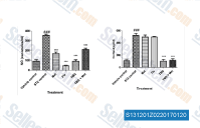
| S1312 | Streptozotocin (STZ) | Streptozotocin (STZ) is a glucosamine-nitrosourea compound derived from Streptomyces achromogenes, which is a DNA-methylating, carcinogenic, antibiotic and diabetes inducing agent. It induces autophagy and apoptosis. This compound can be used to induce animal models of diabetes.Solutions are unstable and should be fresh-prepared. |
|
|
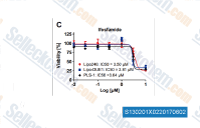
| S1302 | Ifosfamide | Ifosfamide is a nitrogen mustard alkylating agent used in the treatment of cancer. This compound is typically administered intravenously and undergoes metabolic activation in the liver to produce its active alkylating species. The primary mechanism of action of this agent involves cross-linking DNA strands, thereby inhibiting DNA replication and transcription, which leads to cell death. Due to its potential for causing haemorrhagic cystitis, this medication is often used in combination with mesna, a uroprotectant agent. The clinical use of this chemical includes treatment of various cancers, such as germ cell tumours, soft tissue sarcomas, and lymphomas. Despite its efficacy, this drug is associated with several side effects, including myelosuppression. |
|
|

Products are for research use only. Not for human use. We do not sell to patients.
©Copyright 2013 Selleck Chemicals. All Rights Reserved.